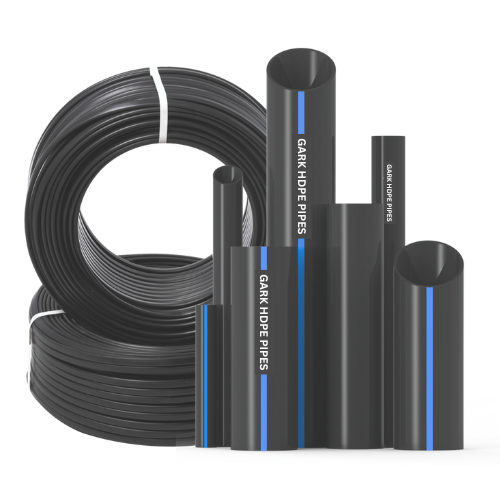
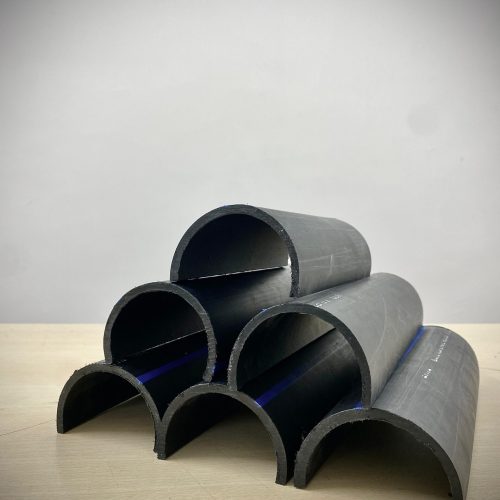
When you look at a specification sheet for an HDPE pipe, you will see a grade designation — PE63, PE80, or PE100. These are not just labels. They are material grade classifications that directly determine the pipe’s pressure capacity, wall thickness, service life, and correct application.
PE80 is one of the most widely specified grades for water supply and agricultural irrigation projects across India. This guide explains exactly what PE80 means, how it performs, and when to specify it.
What Does PE80 Mean?
PE80 stands for Polyethylene with a Minimum Required Strength (MRS) of 8.0 MPa. The number “80” comes from multiplying the MRS value (8.0) by 10 — a convention established under ISO 12162 and adopted in India’s IS 4984:2016 standard for HDPE pipes.
The MRS is determined through long-term hydrostatic pressure testing — subjecting the material to sustained internal pressure at 20°C and measuring its strength over a projected 50-year service lifetime. A material classifies as PE80 when its long-term hydrostatic strength falls in the range of 8.0 to 9.99 MPa. This is the second-generation HDPE pipe material, positioned between the older PE63 grade and the premium PE100 grade.
The allowable hoop stress (σ) for PE80 under IS 4984:2016 is 6.3 MPa — calculated by dividing the MRS by the overall service design coefficient (C = 1.25). This hoop stress value is the foundation of all PE80 pressure rating calculations.
PE80 Pressure Ratings: The SDR Connection
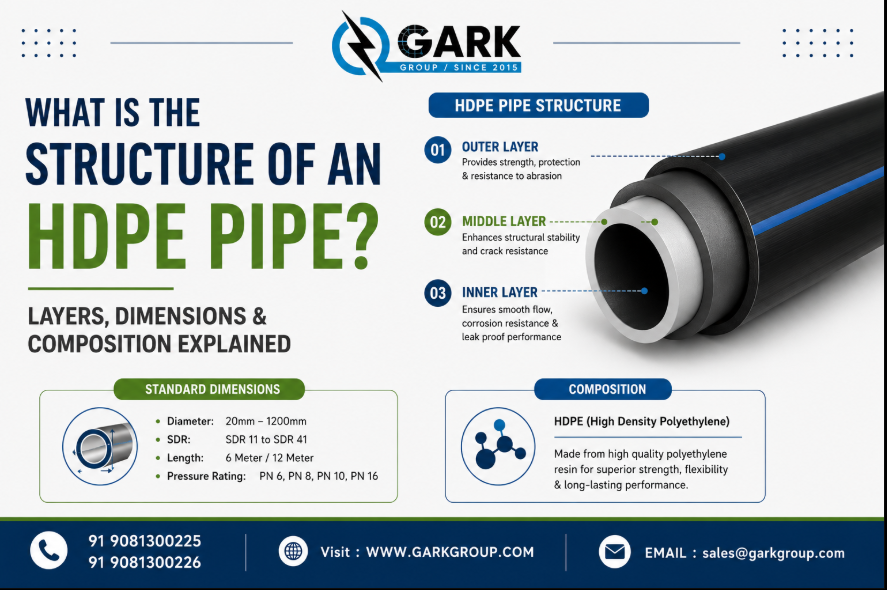
PE80’s pressure rating depends on the SDR (Standard Dimension Ratio) of the pipe — the ratio of outer diameter to wall thickness. Using the IS 4984 formula PN = (20 × σ) ÷ (SDR − 1), PE80 delivers:
SDR 11 → PN 12.5 (12.5 bar working pressure) SDR 13.6 → PN 10 (10 bar) SDR 17 → PN 8 (8 bar) SDR 21 → PN 6 (6 bar) SDR 26 → PN 5 (5 bar)
This is the defining characteristic of PE80: it delivers PN 10 at SDR 13.6, while PE100 achieves the same PN 10 at the thinner-walled SDR 17. In practical terms, PE80 requires a slightly thicker wall to reach the same operating pressure — which means more material per metre, but also greater flexibility, which is an advantage in certain agricultural and small-diameter coil applications.
For a complete explanation of how SDR and material grade combine to determine pressure ratings, our guide What is SDR in HDPE Pipes? covers the full technical picture.
Key Properties of PE80 HDPE Pipe
Chemical inertness: Like all polyethylene grades, PE80 is chemically inert across pH 2 to 13 — immune to corrosion from soil chemistry, groundwater, and standard water treatment chemicals including chlorine at disinfection concentrations.
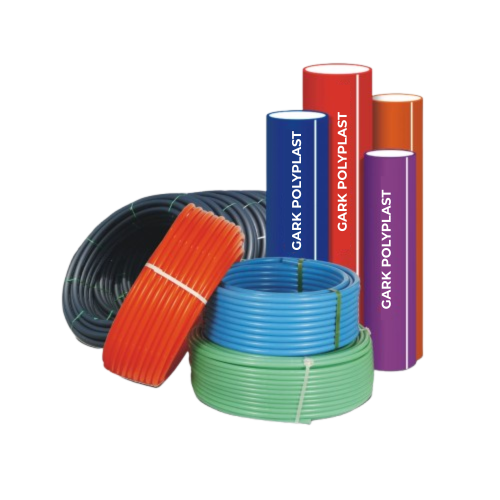
Flexibility: PE80’s molecular structure provides greater flexibility than PE100, making it particularly suited to coiled pipe formats in diameters up to 63mm — widely used in agricultural irrigation, rural water supply connections, and house service pipes where the coiled format enables installation across uneven terrain without fittings.
Potable water safe: IS 4984:2016 certifies PE80 for potable water supply using virgin-grade compound. No BPA, no lead, no phthalates — confirmed by BIS certification. Our detailed guide Are HDPE Pipes Safe for Drinking Water? explains the full safety and certification framework.
50-year service life: PE80 pipes manufactured to IS 4984:2016 have a certified design life of 50 years under standard operating conditions.
Where is PE80 Specified in India?
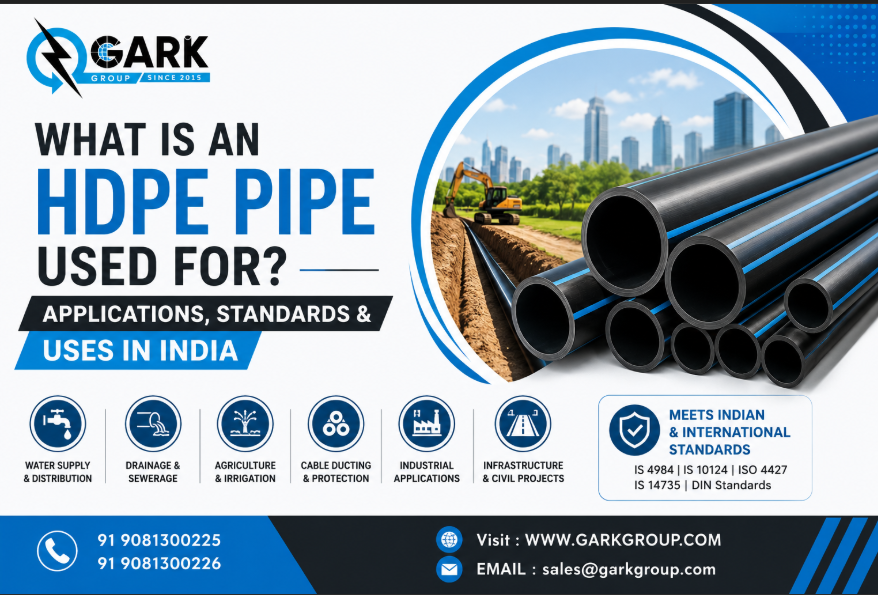
PE80 is the correct specification for:
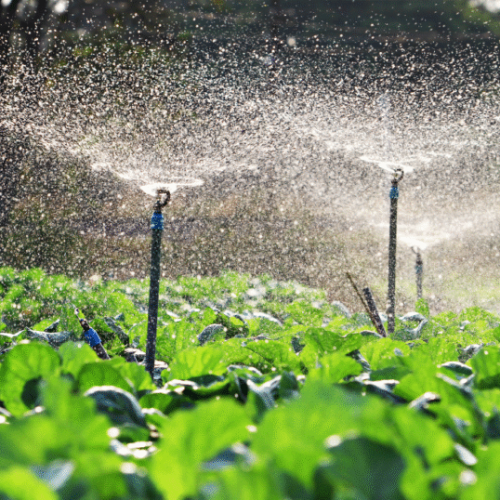
Agricultural irrigation mains — PMKSY sprinkler and drip supply systems where operating pressures are moderate (PN 6–PN 10) and pipe flexibility is valued for installation across farm terrain. Gark Polyplast’s HDPE Sprinkler Pipes are designed for this application category.
Rural and domestic water supply connections — PE80 coiled pipe in 20mm to 63mm OD for service connections and last-mile distribution under the Jal Jeevan Mission, where operating pressure is low and flexibility simplifies installation.
Low-pressure industrial water distribution — process water circuits in factories, cooling water distribution, and general purpose water transfer where system pressures do not exceed PN 10.
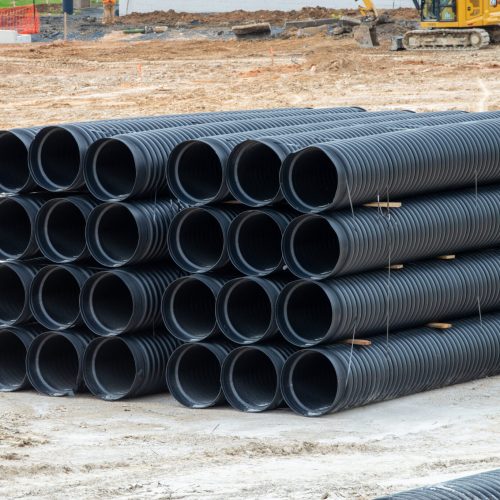
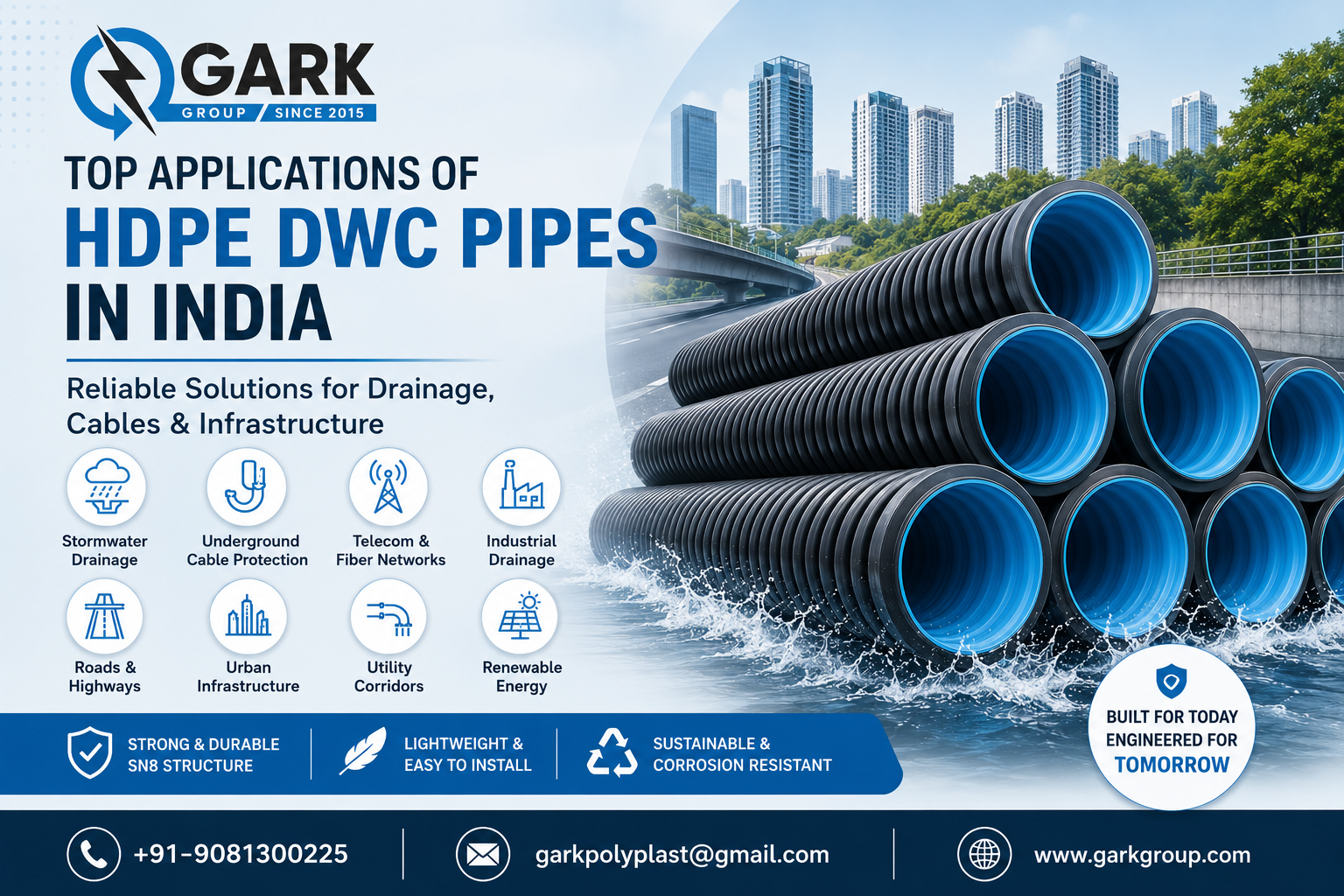
DWC pipe manufacturing — PE80 compound is used in the manufacture of HDPE DWC pipes for sewerage, drainage, and cable conduit applications where structural ring stiffness (SN class) governs specification, not pressure rating.
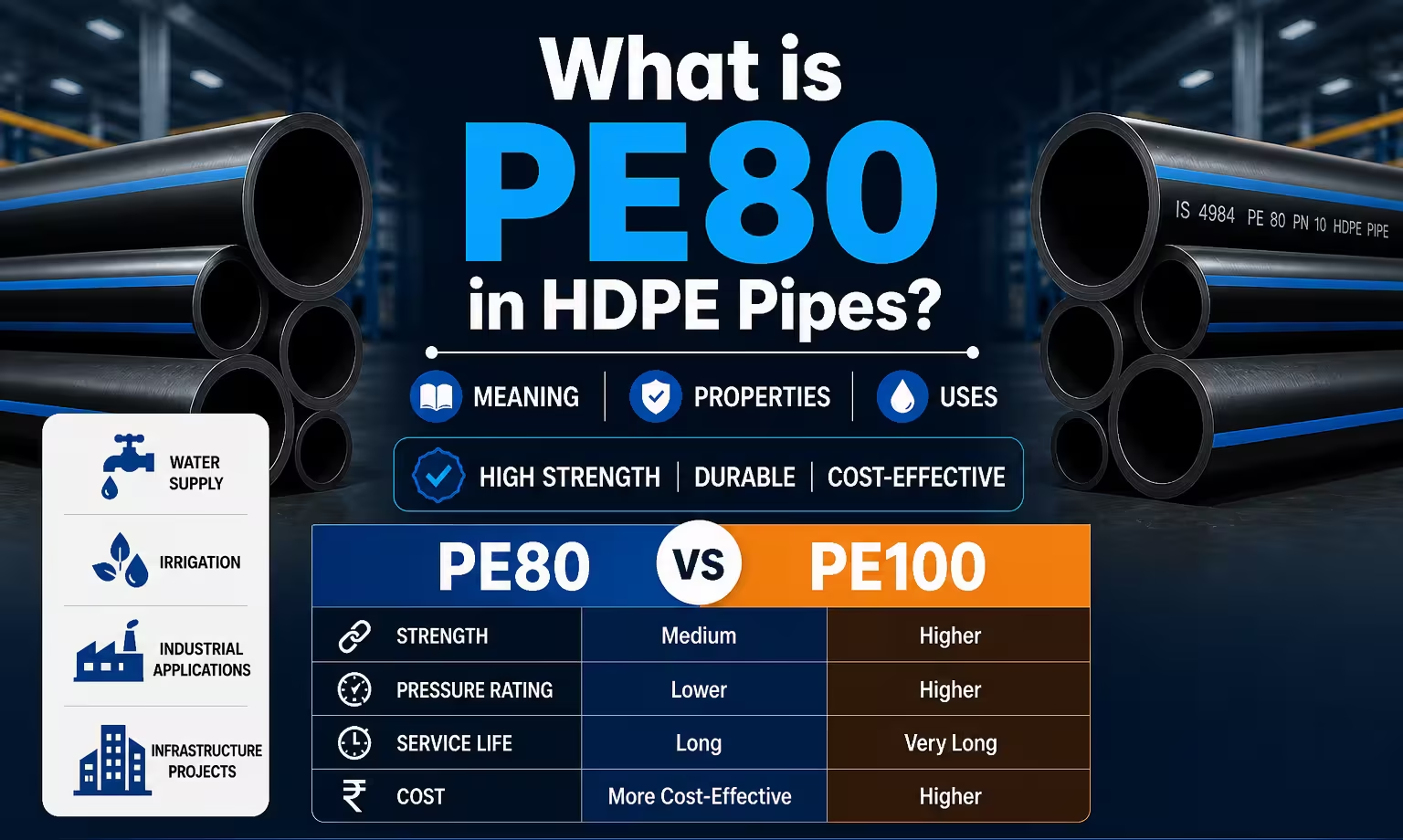
PE80 vs PE100: When to Choose Which
| Parameter | PE80 | PE100 |
|---|
| MRS | 8.0 MPa | 10.0 MPa |
| Allowable hoop stress (σ) | 6.3 MPa | 8.0 MPa |
| SDR 17 pressure rating | PN 8 | PN 10 |
| SDR 11 pressure rating | PN 12.5 | PN 16 |
| Flexibility | Higher | Lower |
| Cost per metre (same OD) | Lower | Higher (thinner wall at same PN) |
| Jal Jeevan Mission distribution mains | Suitable for low-pressure | Preferred (PE100 SDR 17 PN10) |
| Gas distribution | PE80 SDR 11 (standard) | PE100 SDR 11 (high-pressure mains) |
Choose PE80 when operating pressure is PN 10 or below and cost efficiency at adequate performance is the priority — agricultural irrigation, domestic connections, coiled small-diameter pipe.
Choose PE100 when maximum long-term strength, higher pressure ratings (PN 10 to PN 16), or the thinnest possible wall at a given PN is required — JJM distribution mains, municipal water supply, gas networks, industrial pressure systems.
Frequently Asked Questions
Is PE80 the same as HDPE?
PE80 can be either HDPE or MDPE depending on the density of the specific compound. Under IS 4984:2016, PE80 compound used for pressure pipes is typically high-density polyethylene. The PE grade (PE80 or PE100) describes the material’s long-term strength, not its density category.
Can PE80 pipes be used for drinking water supply?
Yes. IS 4984:2016 certifies PE80 for potable water supply when manufactured from virgin-grade compound with BIS/ISI mark. It contains no BPA, lead, or phthalates and is chemically inert under standard water treatment conditions.
What is the difference between PE80 and PE100 in simple terms?
PE100 is stronger — it has a higher Minimum Required Strength (10.0 MPa vs 8.0 MPa), delivers higher pressure ratings at the same SDR, and allows a thinner wall for the same pressure. PE80 is more flexible and costs less per metre at the same diameter for lower-pressure applications.


 +91 9081300225 | +91 9081300226
 Sales@garkgroup.com | garkpolyplast@gmail.com
 www.garkgroup.com
 Gark Industrial Park, Kotda-Pirojpura Road, Palanpur, Gujarat 385010