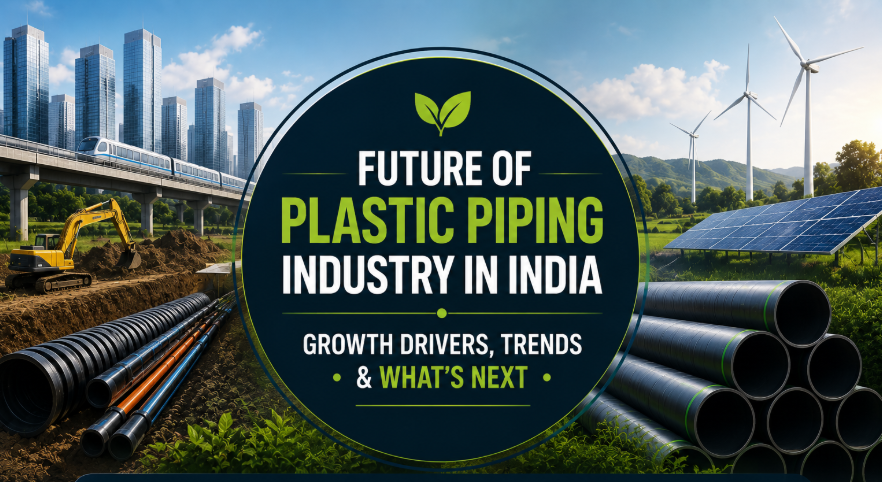
India’s plastic piping industry is at an inflection point. The combination of the largest national water infrastructure programme in history, accelerating urban development, agricultural modernisation, and a fundamental policy shift away from metal and concrete pipes is creating a demand environment that will define the sector for the next decade.
The numbers tell the scale clearly. India’s plastic pipes market is projected to grow from USD 5.46 billion in FY2025 to USD 7.94 billion in FY2033 at a CAGR of 4.80%. India’s per capita plastic products consumption at 13 kg/person/year remains well below global averages, indicating the long runway of growth ahead as infrastructure investment intensifies.
This is not a cyclical uptick. It is a structural transformation — and HDPE pipes are at the centre of it.
1. Government Infrastructure Programmes: The Primary Engine
Five government programmes are simultaneously driving plastic pipe demand at unprecedented scale.
Jal Jeevan Mission 2.0 — extended to December 2028 with ₹8.69 lakh crore total outlay — is the largest single driver. Every rural piped water supply scheme requires IS 4984:2016 BIS-certified HDPE pressure pipes. With over 15.44 crore households already connected and the remaining coverage gap being closed, pipe procurement continues at volume through the extension period.
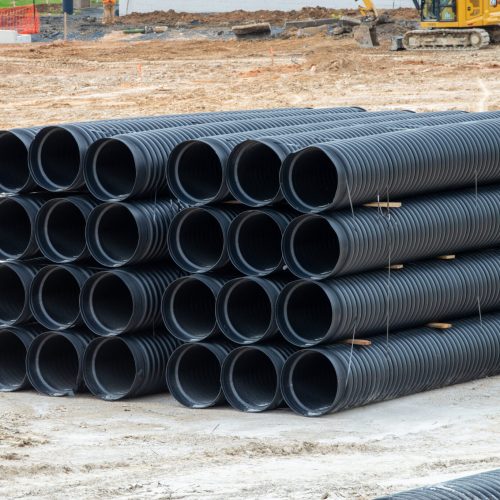
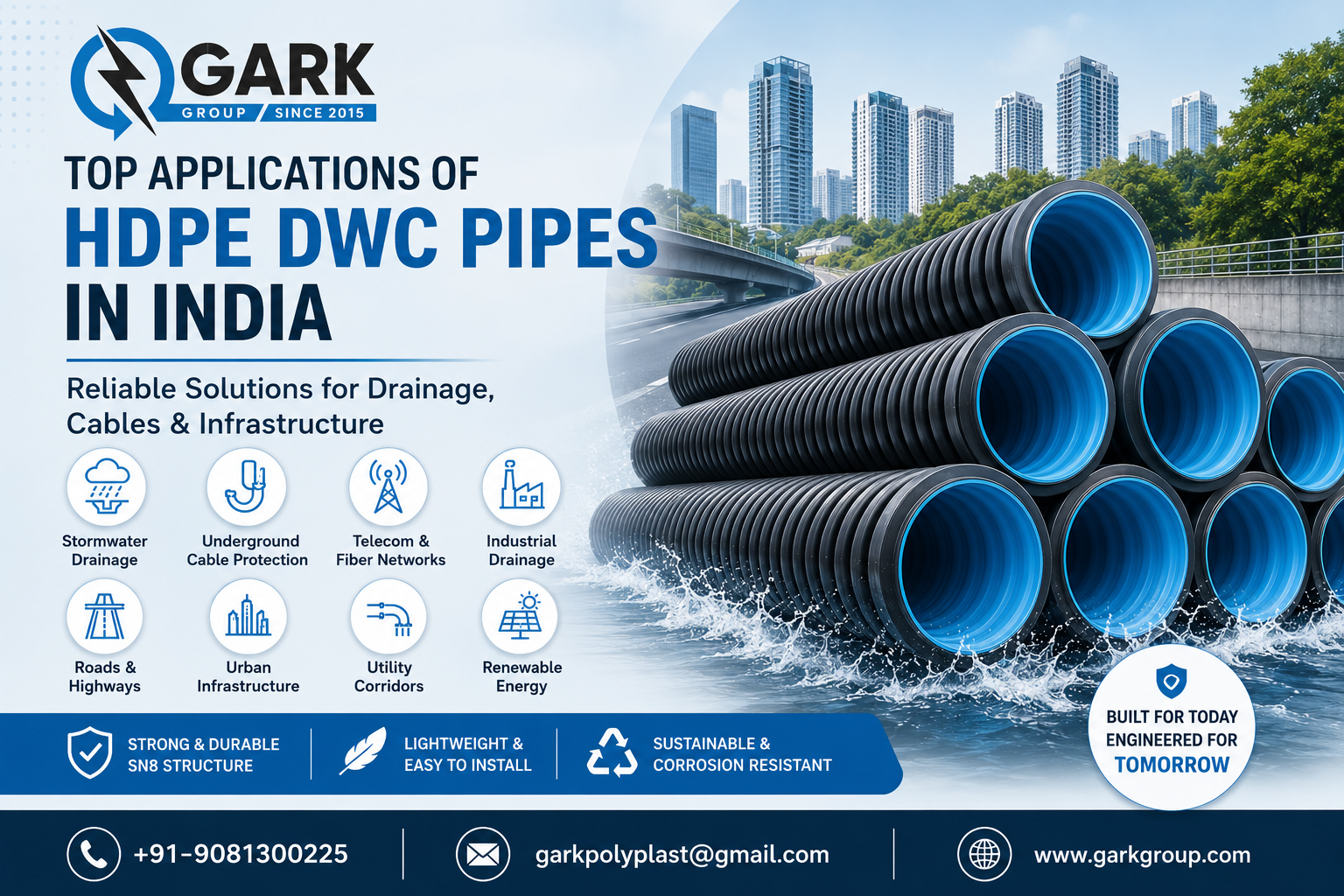
AMRUT 2.0 is funding sewerage, drainage, and water supply upgrades across 500+ urban centres. HDPE DWC pipes (IS 16098) for sewerage and HDPE pressure pipes for distribution are the specified materials for new underground infrastructure replacing corroded GI and leaking concrete systems.
BharatNet Phase 3 continues the rollout of optical fibre connectivity to India’s villages. Every kilometre of OFC deployed underground requires PLB Duct Pipes — Permanently Lubricated Bore ducts that allow high-speed cable blowing over 1,000-metre continuous runs.
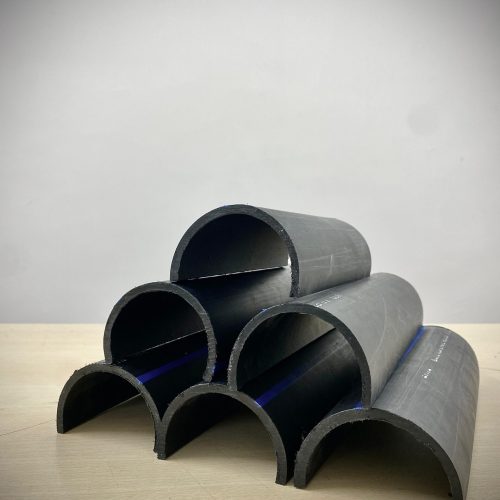
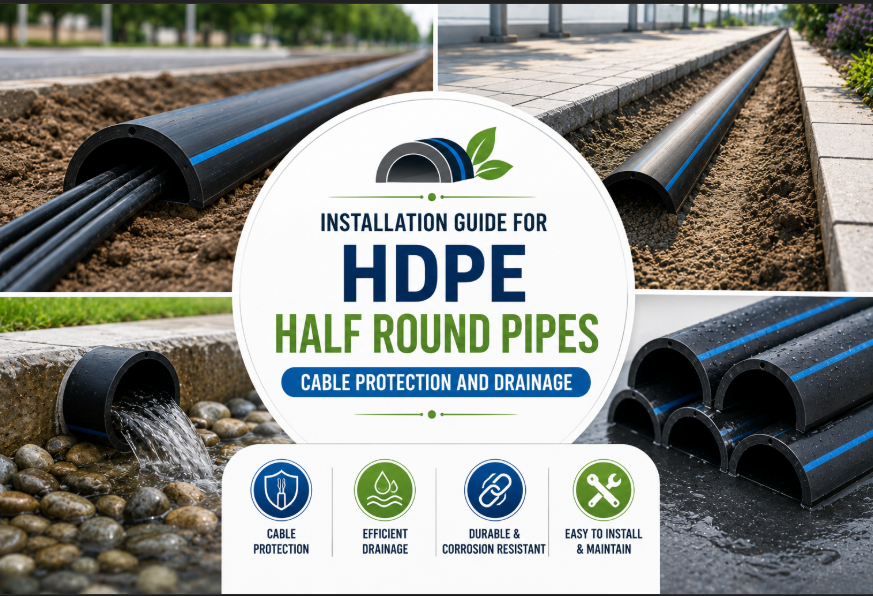
RDSS (Revamped Distribution Sector Scheme) is undergrounding India’s power distribution network in cities and towns. HDPE DWC Pipes and HDPE Half Round Pipes are the cable protection products specified for LT and HT cable runs.
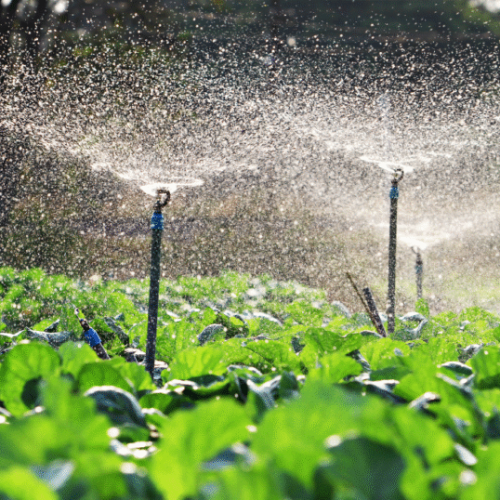
PMKSY continues expanding micro-irrigation with USD 970 million allocated for FY2025-26. HDPE Sprinkler Pipes (IS 17425) serve the irrigation distribution network. Irrigation accounts for 40% of total pipe use in India, yet only half of India’s farmland is irrigated — leaving significant room for further growth.
2. GI Pipe Replacement: A Structural Tailwind
Almost a third of domestic plastic pipe demand is from the replacement market — driven by the replacement of GI pipes, whose average life is 20–25 years and which are prone to corrosion. As India’s post-Independence era GI networks age into their fourth decade, the replacement cycle is accelerating. Every GI kilometre replaced is an HDPE kilometre installed — leak-free, corrosion-free, and certified for 50-year service.
For project engineers and procurement authorities, this is not a preference. It is an economic imperative. A GI pipe network replaced every 20 years costs three times the lifecycle cost of an HDPE system replaced once in 50+ years. The total cost of ownership case is the same argument that drove Europe and North America to HDPE decades ago — and India is now at the same transition point at far greater scale.
3. City Gas Distribution: HDPE’s Fastest-Growing Segment
Plastic pipes, including HDPE, are replacing metal pipes in city gas distribution projects, cutting costs by 25–30% and supporting India’s target of 70% gas network coverage by 2030. PE80 SDR 11 (PN 12.5) and PE100 SDR 11 (PN 16) are the standard specifications for gas distribution networks under PNGRB guidelines. As India’s city gas distribution network expands to new towns and cities, HDPE pipe demand in this segment is growing at above-market rates.
4. Technology and Material Advancement
The industry is moving beyond standard pipe grades toward performance-enhanced products. UV-resistant HDPE for above-ground solar and agricultural applications, PE100-RC for trenchless horizontal directional drilling, and structured-wall DWC pipes in SN8 class for deep-burial applications are already mainstream in specification practice. IoT-integrated monitoring systems are beginning to be deployed on HDPE water mains — enabling real-time leak detection, flow monitoring, and pressure management that maximises the utility of new pipe infrastructure.
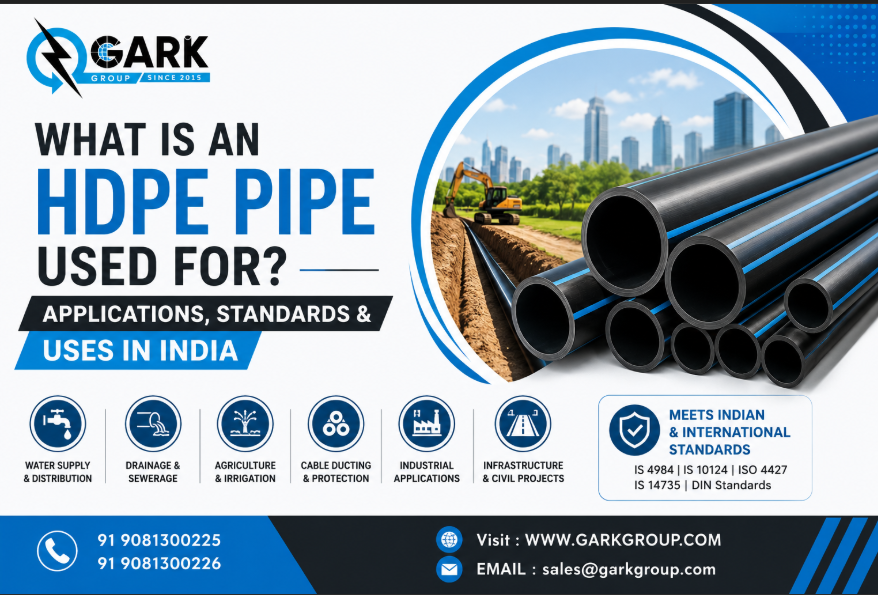
BIS certification and standardisation is advancing in parallel. IS 4984:2016, IS 16098, IS 16205, and IS 17425 provide the certification framework that ensures product quality across the supply chain. The mandatory BIS/ISI mark requirement in government tenders is progressively filtering out substandard product — raising the quality floor for the entire industry.
5. Sustainability Driving Specification Preference
Environmental compliance is increasingly a specification criterion, not just a marketing theme. ISO 14001:2015 certified manufacturers, EPR-compliant products, and 100% recyclable materials are becoming procurement preferences in government and ESG-sensitive private sector projects.
HDPE’s combination of 50+ year service life, lower carbon footprint vs concrete and metal, and full recyclability at end of life makes it the strongest sustainability case in the pipe category. Our detailed post on sustainable infrastructure with HDPE pipes covers the full environmental picture.
Gark Polyplast: Ready for India’s Plastic Pipe Future
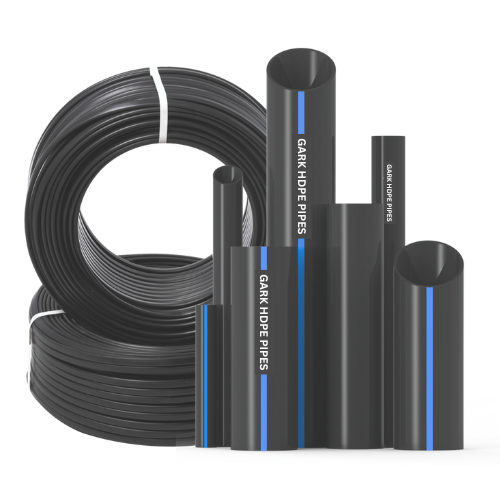
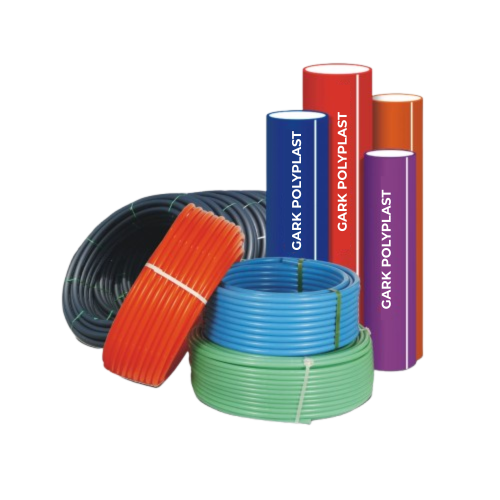
Gark Polyplast Pvt. Ltd. is Gujarat’s most comprehensively certified HDPE pipe manufacturer — positioned at the intersection of every demand driver shaping the industry’s future. ISO 9001:2015, ISO 14001:2015, and ISO 45001:2018 certified. BIS/ISI mark licences under IS 4984, IS 16098, IS 16205, IS 17425, and TEC GR/TX/CDS-008/03. Virgin-grade PE63, PE80, and PE100 compound across every product line.
The plastic piping industry’s future belongs to manufacturers who produce certified, traceable, high-performance HDPE pipe at scale — the infrastructure programmes outlined above do not allow for quality compromise. Explore our complete product range, download our catalogue, or contact our team to discuss your project requirements.
Partner with Gark Polyplast for Your DWC Pipe Requirements
Gark Polyplast Pvt. Ltd. is an ISI certified, BIS-marked manufacturer of HDPE DWC Pipes, HDPE Pipes, and PLB Ducts — operating from our state-of-the-art facility in Palanpur, Gujarat, since 2015.
 +91 9081300225 | +91 9081300226
 Sales@garkgroup.com | garkpolyplast@gmail.com
 www.garkgroup.com
 Gark Industrial Park, Kotda-Pirojpura Road, Palanpur, Gujarat 385010