Understanding HDPE: The Material Revolutionizing Modern Infrastructure
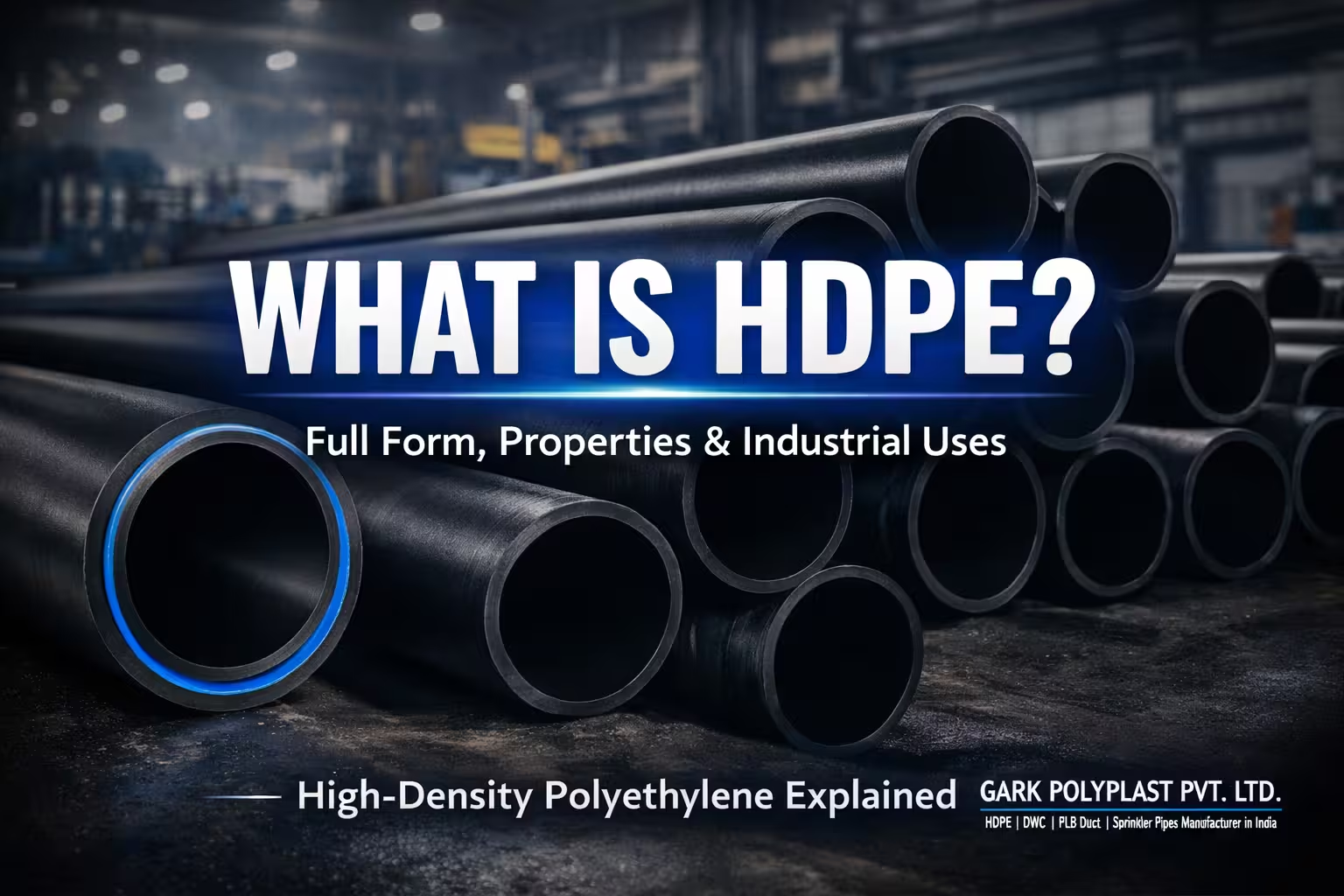
High-Density Polyethylene, commonly known as HDPE, has become one of the most versatile and widely used materials in modern construction, telecommunications, and water management systems. At GARK Polyplast, we’ve specialized in manufacturing premium HDPE pipes since 2015, serving clients across India with ISI-certified products that meet the highest quality standards.
HDPE Full Form and Basic Definition
HDPE stands for High-Density Polyethylene. It is a thermoplastic polymer produced from the monomer ethylene through a polymerization process. The term “high-density” refers to its molecular structure, which features minimal branching in its polymer chains, resulting in stronger intermolecular forces and superior strength compared to other polyethylene types.
What Makes HDPE “High-Density”?
The density of HDPE ranges from 930 to 970 kg/m³ (or 0.93 to 0.97 g/cm³). While this density is only marginally higher than Low-Density Polyethylene (LDPE), the linear molecular structure of HDPE provides significantly enhanced tensile strength—approximately 38 MPa compared to LDPE’s 21 MPa. This unique combination delivers an exceptional strength-to-density ratio, making HDPE both lightweight and remarkably durable.
Chemical Composition and Manufacturing Process
The HDPE Formula
The chemical formula of HDPE is (C₂H₄)ₙ, where:
- C₂H₄ represents an ethylene monomer unit
- The subscript “n” indicates the number of repeating ethylene units in the polymer chain
This molecular structure determines the material’s properties, including its strength, rigidity, and resistance to environmental factors.
How HDPE Pipes Are Made
HDPE pipe manufacturing involves several sophisticated processes:
- Raw Material Preparation: Food-grade or industrial-grade polyethylene virgin material is selected based on the intended application
- Drying and Heating: The raw material is dried and heated to approximately 180°C (356°F)
- Extrusion: The heated polymer is extruded through precision dies to create pipes of specific dimensions
- Cooling: The extruded pipes are rapidly cooled using water spray or immersion
- Quality Testing: Each batch undergoes rigorous quality control to ensure compliance with standards like IS 4984, IS 16098, and IS 16205
At GARK Polyplast, our state-of-the-art manufacturing facility in Palanpur, Gujarat, employs advanced extrusion technology to produce HDPE pipes that consistently meet international quality benchmarks.
Key Properties of HDPE Pipes
Understanding HDPE properties helps explain why this material has become the preferred choice for critical infrastructure projects worldwide.
1. Exceptional Strength and Durability
HDPE pipes exhibit remarkable tensile strength despite their lightweight nature. This high strength-to-density ratio means that a relatively thin HDPE pipe can safely transport fluids at high pressures without deformation or failure. The material’s excellent impact resistance ensures it can withstand physical stress during installation and operation, even in challenging soil conditions or extreme temperatures ranging from -40°C to +80°C.
2. Superior Chemical Resistance
One of HDPE’s most valuable properties is its resistance to a wide range of chemicals, including:
- Strong acids and alkalis
- Road salts and de-icing chemicals
- Motor oils and petroleum products
- Sewage and wastewater contaminants
- Agricultural chemicals and fertilizers
This chemical inertness makes HDPE pipes ideal for applications where corrosion would rapidly degrade traditional metal pipes. Unlike steel or copper pipes that require protective coatings or cathodic protection in corrosive environments, HDPE pipes can be installed directly without additional treatments.
3. Flexibility and Crack Resistance
HDPE’s inherent flexibility offers significant installation advantages. The material can be:
- Bent around obstacles without requiring numerous fittings
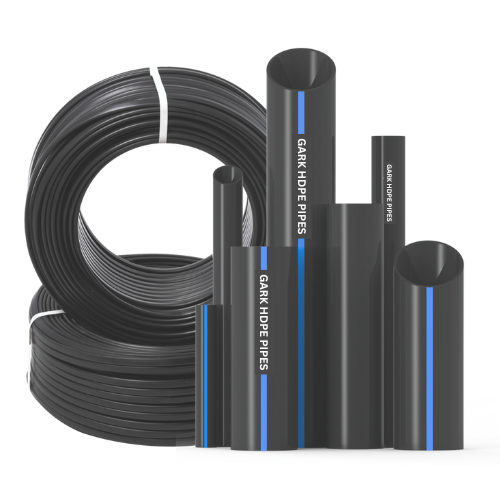
- Coiled for easy transportation and storage
- Laid in trenches that follow terrain contours
- Installed through horizontal directional drilling (HDD)
This flexibility also provides excellent resistance to stress cracking—a common failure mode in rigid piping materials. According to industry studies, HDPE pipes have a failure rate of just 1 in 10 million events, compared to 1 in 48,650 for rigid PVC pipes.
4. Leak-Free Fusion Welding
HDPE pipes are joined using heat fusion techniques including:
- Butt fusion welding: Creating homogeneous joints between pipe ends
- Electrofusion welding: Using electrical heating elements embedded in fittings
- Socket fusion welding: For smaller diameter pipes
- Extrusion welding: For field repairs and complex joints
These fusion welding methods create joints that are as strong as the pipe itself, eliminating weak points and virtually guaranteeing leak-free operation throughout the system’s lifetime.
5. UV and Weather Resistance
When manufactured with carbon black additives (typically 3-5% by weight), HDPE pipes gain excellent UV resistance, making them suitable for outdoor and above-ground installations. The material resists degradation from sunlight exposure, extreme temperatures, and weathering—properties that give HDPE piping systems a projected service life of 50 to 100 years.
6. Low Friction and Flow Efficiency
The smooth interior surface of HDPE pipes provides a low coefficient of friction, approximately 30% lower than PVC and significantly lower than corroded metal pipes. This characteristic means:
- Lower pumping costs due to reduced friction losses
- Higher flow rates for a given pipe diameter
- Minimal buildup of scale or biofilm
- Reduced maintenance requirements over time
7. Environmental Resistance
HDPE pipes excel in harsh environments:
- Moisture Absorption: Near-zero water absorption (<0.01%)
- Biological Resistance: Impervious to bacteria, fungi, mold, and mildew
- Soil Compatibility: Can be laid in marshy or corrosive soils without degradation
- Seismic Performance: Flexibility provides excellent performance in earthquake-prone areas
Industrial Applications and Uses of HDPE Pipes
HDPE’s exceptional properties make it indispensable across numerous industries and applications.
Water Supply and Distribution
HDPE pipes manufactured from food-grade polyethylene virgin material are completely safe for potable water systems. Municipal water authorities worldwide have adopted HDPE for:
- City water mains and distribution networks
- Rural water supply systems
- Private well connections
- Emergency water pipelines
- Water treatment plant piping
The non-toxic nature of HDPE, combined with its resistance to corrosion and scale buildup, ensures that water quality remains consistently high throughout the distribution network.
Telecommunications and Cable Protection
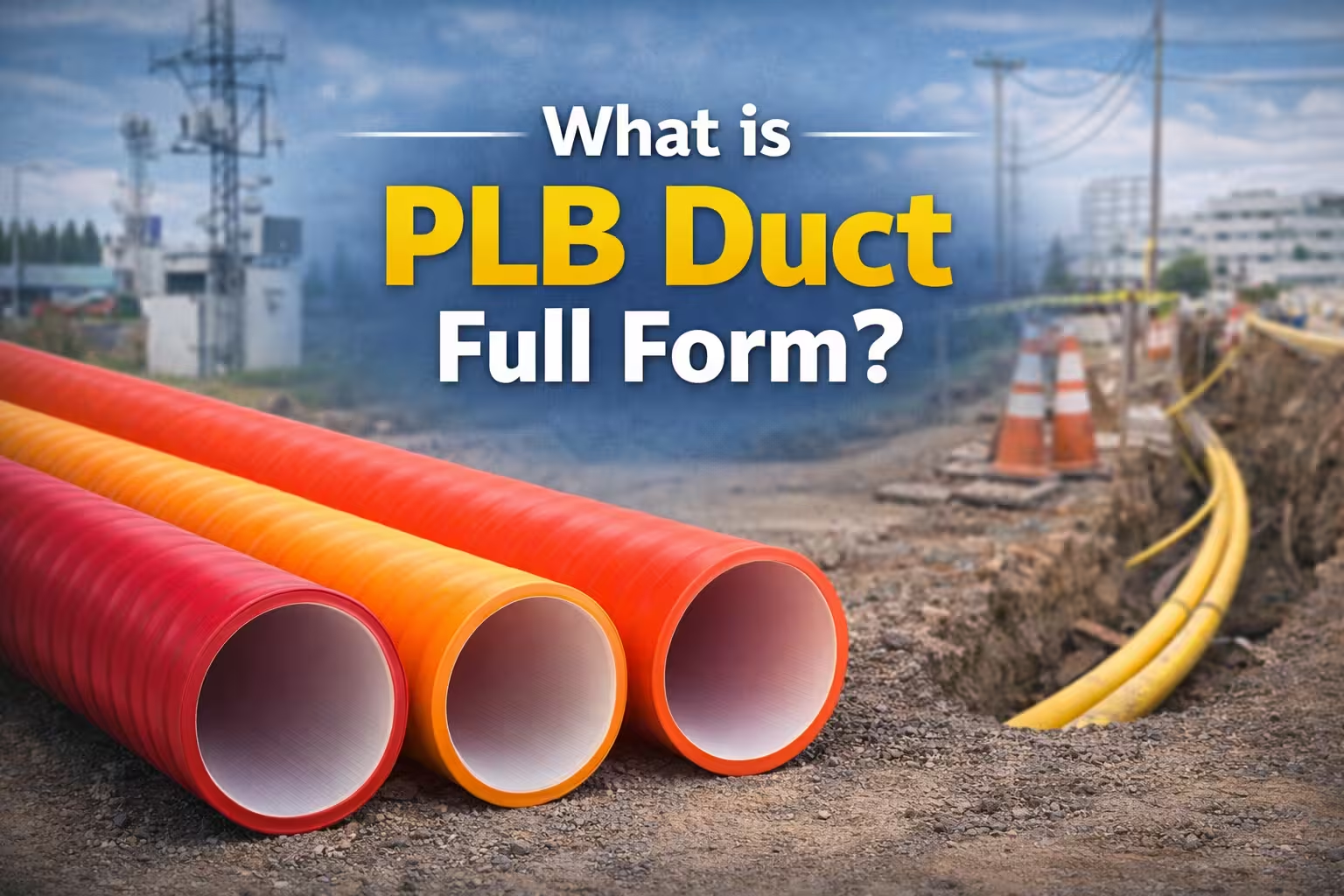
In the rapidly expanding telecommunications sector, PLB (Permanently Lubricated Bore) duct pipes made from HDPE have become the industry standard. These specialized HDPE conduits:
- Protect fiber optic cables from mechanical damage and moisture
- Feature permanent internal lubrication for smooth cable installation
- Enable longer cable runs with fewer access points
- Support Fiber-to-the-Home (FTTH) and 5G network deployments
- Meet TEC specifications (TEC/GR/TX/CDS/008/03/March-2011)
GARK Polyplast’s PLB duct pipes, available in sizes from 25mm to 63mm, are specifically engineered for the telecom sector with a low coefficient of friction that accelerates cable blowing operations.
Sewerage and Drainage Systems
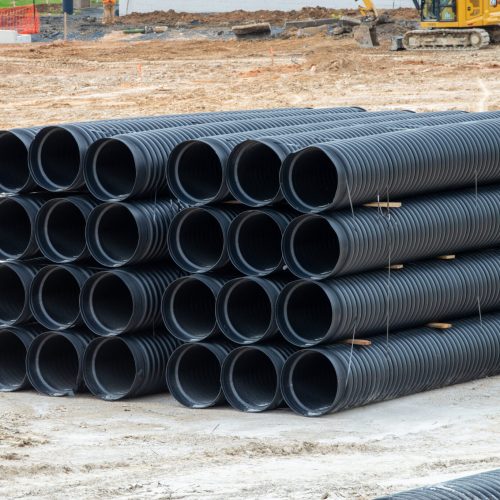
HDPE Double Wall Corrugated (DWC) pipes have revolutionized sewerage and stormwater management:
- SN8-rated pipes (conforming to IS 16098 and IS 16205)
- Superior structural strength with lightweight construction
- Excellent resistance to sewage chemicals and abrasion
- Flexible enough to withstand ground settlement
- Available in sizes from 40mm to 315mm
The double-wall structure provides high ring stiffness while maintaining a smooth interior for efficient flow, making DWC pipes ideal for underground drainage, sewer lines, and culvert applications.
Agricultural Irrigation
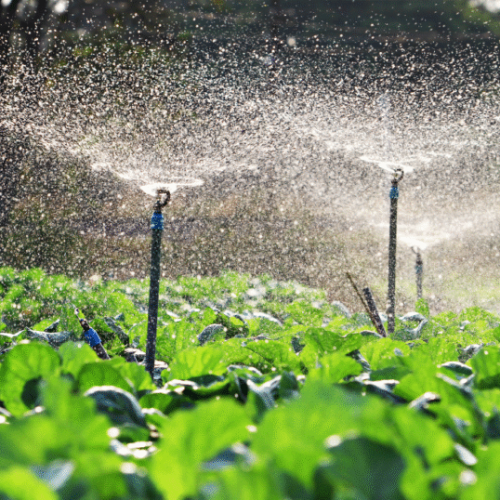
HDPE sprinkler pipes have transformed modern farming:
- Lightweight pipes easy to move and reconfigure
- Available with quick-connect V-type and C-type couplers
- Resistant to fertilizers, pesticides, and soil chemicals
- Conforming to IS 17425 standards (PN 2.5 and PN 3.2 ratings)
- Sizes ranging from 63mm to 140mm
Farmers benefit from reduced installation time, lower maintenance costs, and improved water delivery efficiency compared to traditional galvanized steel or PVC pipes.
Gas Distribution
HDPE pipes are increasingly used for natural gas distribution due to their:
- Excellent resistance to gas permeation
- Ability to flex without fracturing during ground movement
- Corrosion resistance in various soil conditions
- Fusion-welded joints that eliminate leak points
- Long service life with minimal maintenance
Natural gas utilities appreciate HDPE’s safety profile and cost-effectiveness for both new installations and pipe bursting replacement of aging infrastructure.
Industrial and Mining Applications
In demanding industrial environments, HDPE pipes handle:
- Slurry transport in mining operations
- Process water and chemical transfer
- Tailings disposal systems
- Aggressive chemical environments
- High-pressure process applications
The material’s abrasion resistance and chemical compatibility make it ideal where traditional metal piping would fail prematurely.
Electrical Cable Conduit
HDPE conduit protects underground electrical cables:
- UL-listed for electrical applications
- Protects against moisture, chemicals, and physical damage
- Flexible for directional drilling installations
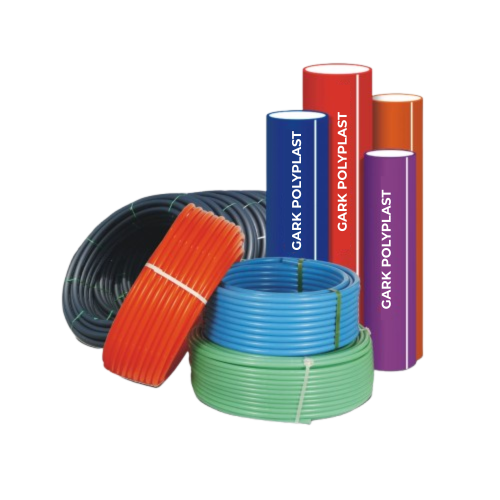
- Color-coded for easy identification (orange, black, red)
- Long continuous lengths reduce the number of joints
Utility companies rely on HDPE conduit to protect critical electrical infrastructure from environmental hazards and accidental damage during excavation.
Construction and Infrastructure
Modern construction projects utilize HDPE for:
- Stormwater management systems
- Road and highway drainage
- Geomembrane applications in landfills
- Erosion control systems
- Foundation drainage around buildings
HDPE’s durability ensures that infrastructure investments deliver value over decades of service.
HDPE Grades: PE63, PE80, and PE100
HDPE pipes are classified into grades based on their minimum required strength (MRS) values, which determine pressure ratings and applications.
PE63 Grade
- Minimum Required Strength: 6.3 MPa
- Suitable for lower pressure applications
- Common in drainage and non-pressure conduit systems
PE80 Grade
- Minimum Required Strength: 8.0 MPa
- Balanced performance for various applications
- Widely used in water distribution and irrigation
- Available in pressure ratings from PN 2.5 to PN 10
PE100 Grade
- Minimum Required Strength: 10.0 MPa
- Premium grade for high-pressure applications
- Optimal strength-to-weight ratio
- Preferred for critical infrastructure projects
- Longer service life and greater pressure capability
At GARK Polyplast, we manufacture pipes in all three grades, ensuring customers can select the optimal material for their specific application and pressure requirements.
Understanding HDPE Pipe Standards and Specifications
Indian Standards (IS)
- IS 4984: Specification for HDPE pipes for water supply
- IS 16098: HDPE structured wall pipes for non-pressure application
- IS 16205: Double Wall Corrugated pipes for underground drainage
- IS 17425: HDPE pipes for sprinkler irrigation systems
International Standards
- ASTM F2160: Standard for solid wall HDPE duct
- ASTM F714: Standard for polyethylene (PE) pressure pipe
- ISO 4427: Polyethylene pipes for water supply
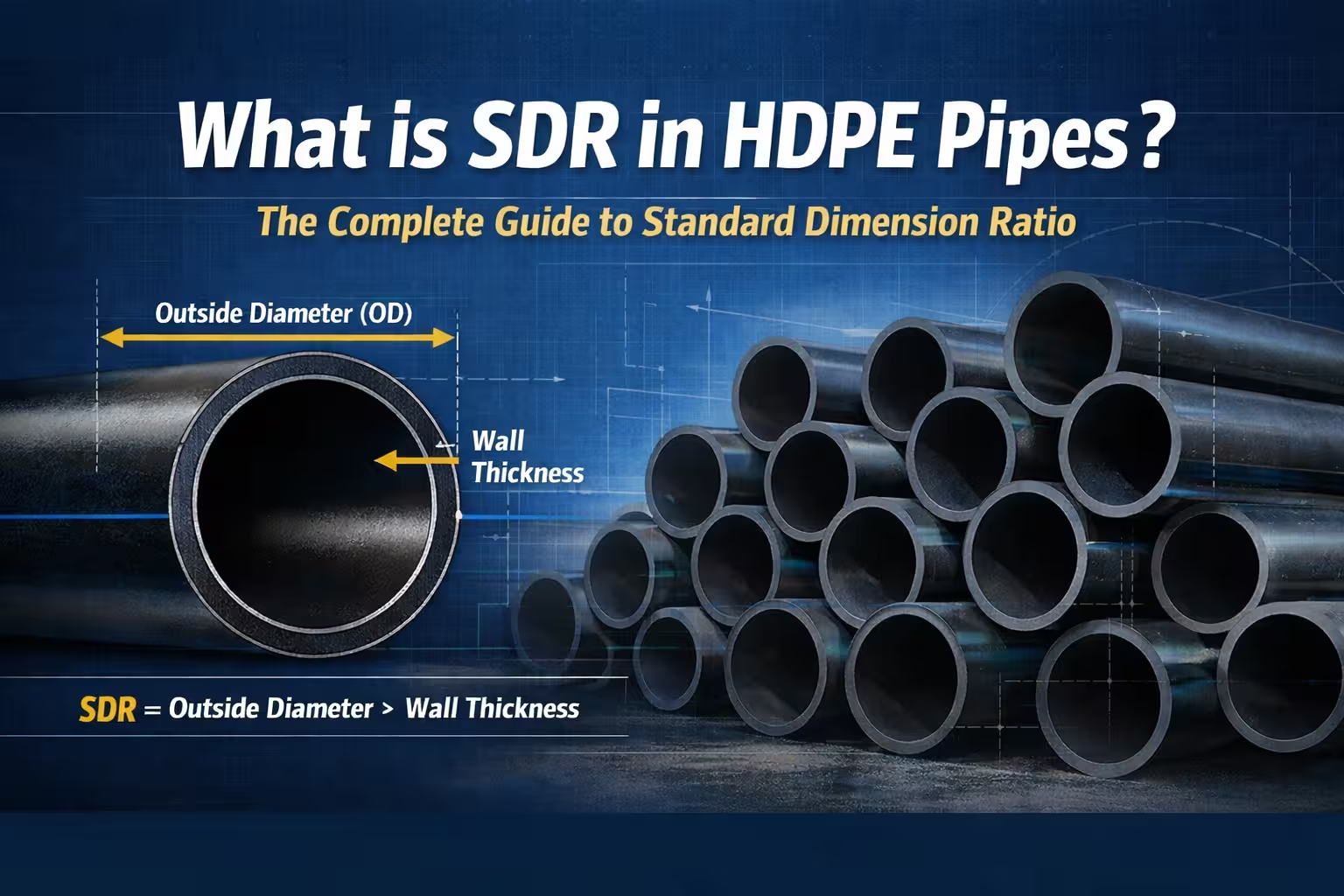
Pressure Ratings and SDR
Standard Dimension Ratio (SDR) indicates the relationship between pipe diameter and wall thickness:
- Lower SDR = Thicker walls = Higher pressure rating
- Common SDR values: SDR 26, SDR 21, SDR 17, SDR 13.6, SDR 11
- Pressure ratings: PN 2.5, PN 4, PN 6, PN 8, PN 10
For example, a 110mm diameter pipe in PE100 grade at SDR 11 can handle PN 16 (16 bar) pressure, while the same diameter at SDR 26 is rated for PN 6 (6 bar).
Environmental Benefits and Sustainability
HDPE pipes align with global sustainability goals through multiple environmental advantages.
Recyclability
HDPE is fully recyclable with resin identification code #2. Recycled HDPE (rHDPE) can be:
- Reprocessed into new pipes and products
- Used in composite materials for lumber and decking
- Incorporated into non-pressure applications
- Blended with virgin material to maintain performance
This circular economy approach significantly reduces plastic waste and conserves petroleum resources.
Energy Efficiency
HDPE manufacturing requires less energy than metal pipe production:
- Lower melting temperatures reduce energy consumption
- Lightweight material minimizes transportation fuel costs
- Long service life reduces replacement frequency
- Efficient flow characteristics lower pumping energy requirements
Reduced Carbon Footprint
Compared to traditional materials:
- No protective coatings or galvanization needed
- Minimal maintenance over 50-100 year lifespan
- Fewer joints mean reduced leak-related waste
- Trenchless installation methods minimize environmental disruption
HDPE vs. Other Piping Materials
HDPE vs. PVC
| Property | HDPE | PVC |
|---|
| Flexibility | Highly flexible | Rigid |
| Impact resistance | Excellent | Moderate |
| Chemical resistance | Superior | Good |
| UV resistance | Excellent (with carbon black) | Limited |
| Joining method | Fusion welding | Solvent cement/gaskets |
| Failure rate | 1 in 10,000,000 | 1 in 48,650 |
| Temperature range | -40°C to +80°C | -15°C to +60°C |
HDPE vs. Metal Pipes
Advantages of HDPE:
- No corrosion or scale buildup
- Much lighter weight (easier handling)
- Lower installation costs
- No cathodic protection required
- Immune to electrolysis
- Superior flexibility
Advantages of Metal:
- Higher temperature tolerance
- Greater rigidity for exposed installations
- Established design standards for certain applications
Installation and Joining Techniques
Butt Fusion Welding
The most common method for pipes 90mm and larger:
- Pipe ends are faced to ensure square, clean surfaces
- A heated plate is inserted between the pipe ends
- Pressure is applied to create beads of melted material
- The heating plate is removed and pipe ends are pressed together
- The joint cools under pressure, creating a homogeneous bond
Electrofusion Welding
Ideal for tight spaces and repair work:
- Special fittings contain electrical heating coils
- Pipes are inserted into the fitting
- Electrical current heats the coils, melting both the fitting and pipe surfaces
- Creates a leak-proof fusion bond
Horizontal Directional Drilling (HDD)
HDPE’s flexibility enables trenchless installation:
- Minimal surface disruption
- Ability to cross roads, rivers, and sensitive areas
- Faster installation than traditional trenching
- Reduced restoration costs
Mechanical Connections
For certain applications, mechanical fittings provide:
- Quick installation without specialized equipment
- Ability to disassemble for maintenance
- Connections between HDPE and other materials
Quality Assurance and Testing at GARK Polyplast
As an ISO 9001:2015, ISO 14001:2015, and ISO 45001:2018 certified manufacturer, GARK Polyplast implements comprehensive quality control:
Raw Material Testing
- Virgin material purity verification
- Melt Flow Index (MFI) testing
- Density measurements
- Carbon black content analysis (for UV resistance)
In-Process Quality Control
- Dimensional accuracy monitoring
- Wall thickness verification
- Ovality measurements
- Visual inspection for defects
Finished Product Testing
- Hydrostatic pressure testing
- Tensile strength verification
- Impact resistance testing
- Elongation at break measurements
- Environmental stress crack resistance (ESCR)
These rigorous quality measures ensure that every pipe leaving our facility meets or exceeds IS and ASTM standards, providing customers with reliable, long-lasting products.
The Future of HDPE Technology
Emerging Applications
Innovation continues to expand HDPE applications:
- Smart pipes with embedded sensors for leak detection
- Antimicrobial HDPE for healthcare and food processing
- Enhanced recycled content formulations
- Improved UV-resistant grades for exposed installations
- Higher pressure ratings for specialized applications
Market Growth
The global HDPE pipes market, valued at USD 21.82 billion in 2024, is projected to reach USD 28.46 billion by 2029, growing at a compound annual growth rate (CAGR) of 5.5%. This growth is driven by:
- Rapid urbanization and infrastructure development
- Government investments in water and sanitation projects
- Expansion of telecommunications networks (fiber optics and 5G)
- Agricultural modernization and efficient irrigation adoption
- Replacement of aging concrete and metal pipe infrastructure
Technological Advancements
Recent innovations include:
- 3D printing techniques for custom fittings
- Advanced extrusion methods for better dimensional control
- Improved fusion welding equipment for faster, more reliable joints
- Enhanced formulations for extreme temperature applications
Selecting the Right HDPE Pipe for Your Project
When choosing HDPE pipes, consider:
Application Requirements
- Pressure rating needed (PN class)
- Flow rate requirements
- Chemical compatibility
- Temperature conditions
- Installation method (trenching, HDD, plowing)
Material Grade
- PE100 for high-pressure water supply and critical applications
- PE80 for general water distribution and irrigation
- PE63 for low-pressure drainage and conduit
Pipe Specifications
- Diameter and wall thickness
- SDR rating appropriate for operating pressure
- Color coding for utility identification
- Coil vs. straight lengths based on installation method
Standards Compliance
- Relevant IS standards (IS 4984, IS 16098, IS 16205, IS 17425)
- Industry-specific requirements (TEC for telecom, RDSO for railways)
- Local regulatory requirements
Why Choose GARK Polyplast for HDPE Pipes?
Experience and Expertise
Since our establishment in 2015, GARK GROUP has grown into a trusted name in the HDPE piping industry. Our facility in Palanpur, Gujarat—strategically located for pan-India distribution—houses advanced manufacturing technology and skilled engineers dedicated to quality.
Comprehensive Product Range
We offer a complete portfolio of HDPE solutions:
Certifications and Standards
- ISO 9001:2015 Quality Management
- ISO 14001:2015 Environmental Management
- ISO 45001:2018 Occupational Health and Safety
- ISI Mark certification
- BIS-compliant products
Customer-Centric Approach
We provide:
- Technical consultation for project planning
- Customized solutions for specific applications
- Prompt delivery across India through our robust logistics network
- Post-installation support and guidance
- Competitive pricing without compromising quality
Trusted by Industry Leaders
Our pipes have been specified and used by:
- Indian Railways projects
- Major construction contractors
- Telecom infrastructure companies
- Municipal water authorities
- Agricultural development projects
Cost-Effectiveness of HDPE Pipes
While initial material costs may seem comparable to alternatives, HDPE pipes deliver superior value through:
Lower Installation Costs
- Lightweight material reduces labor and equipment needs
- Longer coil lengths mean fewer joints
- Faster fusion welding compared to traditional joining methods
- Trenchless installation options reduce excavation expenses
Minimal Maintenance
- No corrosion means no protective coating replacements
- Leak-free fusion joints eliminate routine maintenance
- No cathodic protection systems to install or monitor
- Resistant to scale buildup that reduces flow capacity
Extended Service Life
- 50-100 year projected lifespan
- No premature failures from corrosion or stress cracking
- Excellent performance in harsh environments
- Resistance to chemical attack and biological degradation
Total Cost of Ownership
When evaluated over their entire service life, HDPE piping systems consistently prove more economical than traditional materials, even before considering indirect benefits like reduced water loss from leaks and lower energy costs from efficient flow characteristics.
HDPE – The Smart Choice for Modern Infrastructure
High-Density Polyethylene has earned its position as the material of choice for contemporary piping applications through a combination of superior properties, environmental benefits, and economic advantages. From delivering clean water to remote villages to enabling high-speed telecommunications networks and protecting critical electrical infrastructure, HDPE pipes are literally building the foundation for progress.
At GARK Polyplast, we’re proud to be part of this transformation. Our commitment to manufacturing excellence, rigorous quality control, and customer satisfaction ensures that every project we support benefits from the full potential of HDPE technology.
Whether you’re planning a municipal water system, telecommunications network, agricultural irrigation project, or industrial process application, HDPE pipes offer the reliability, durability, and performance your project demands.
Ready to Experience the GARK Difference?
Contact us today to discuss your piping requirements:
 Phone: +91-9081300225 / +91-9081300226
 Email: sales@garkgroup.com / garkpolyplast@gmail.com
 Website: www.garkgroup.com
 Address: GARK Industrial Park, Kotda-Pirojpura Road, Palanpur, Gujarat 385010
Explore our complete product catalog or visit our website to learn more about how GARK Polyplast’s HDPE solutions can strengthen your next project.