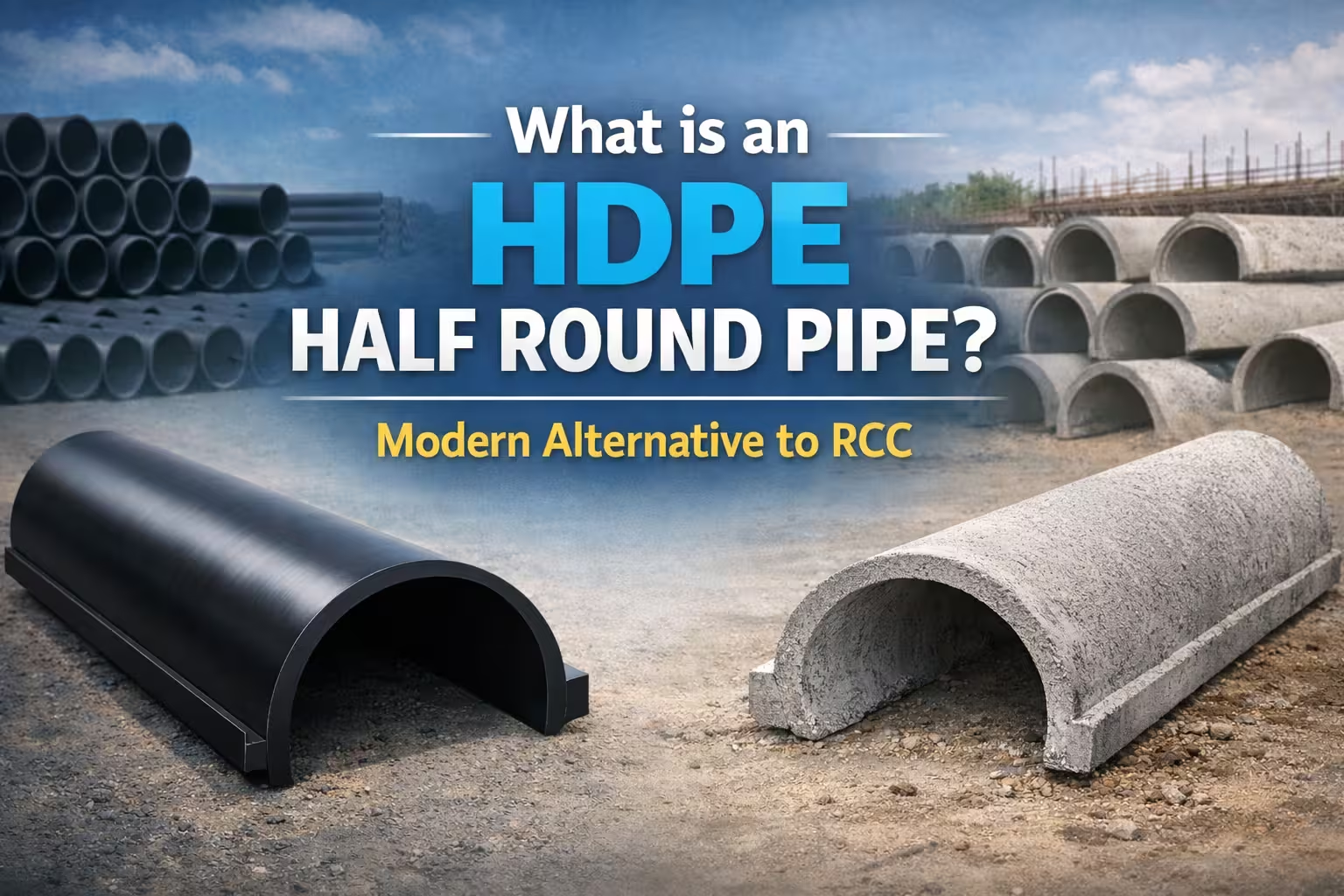
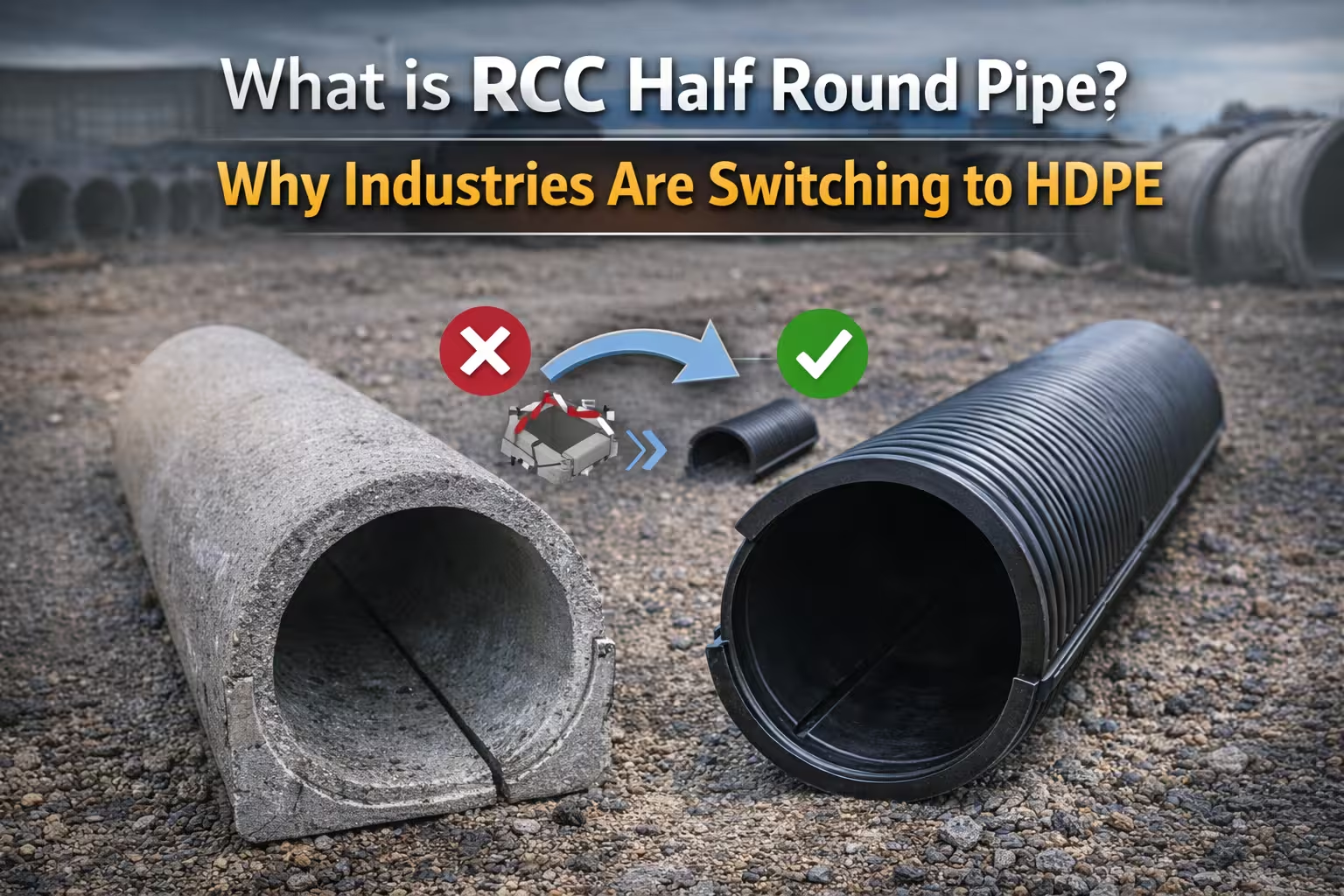
Half round pipes play a crucial role in underground cable protection, drainage systems, highways, railways, and urban infrastructure. Traditionally, RCC Half Round Pipes were widely used across India. However, with rapid technological advancement and the demand for durable, lightweight, and corrosion-resistant solutions, HDPE Half Round Pipes have emerged as a modern alternative.
This blog provides a detailed, easy-to-understand comparison of RCC Half Round Pipes and HDPE Half Round Pipes, helping contractors, government departments, and general readers choose the right solution for long-term performance.
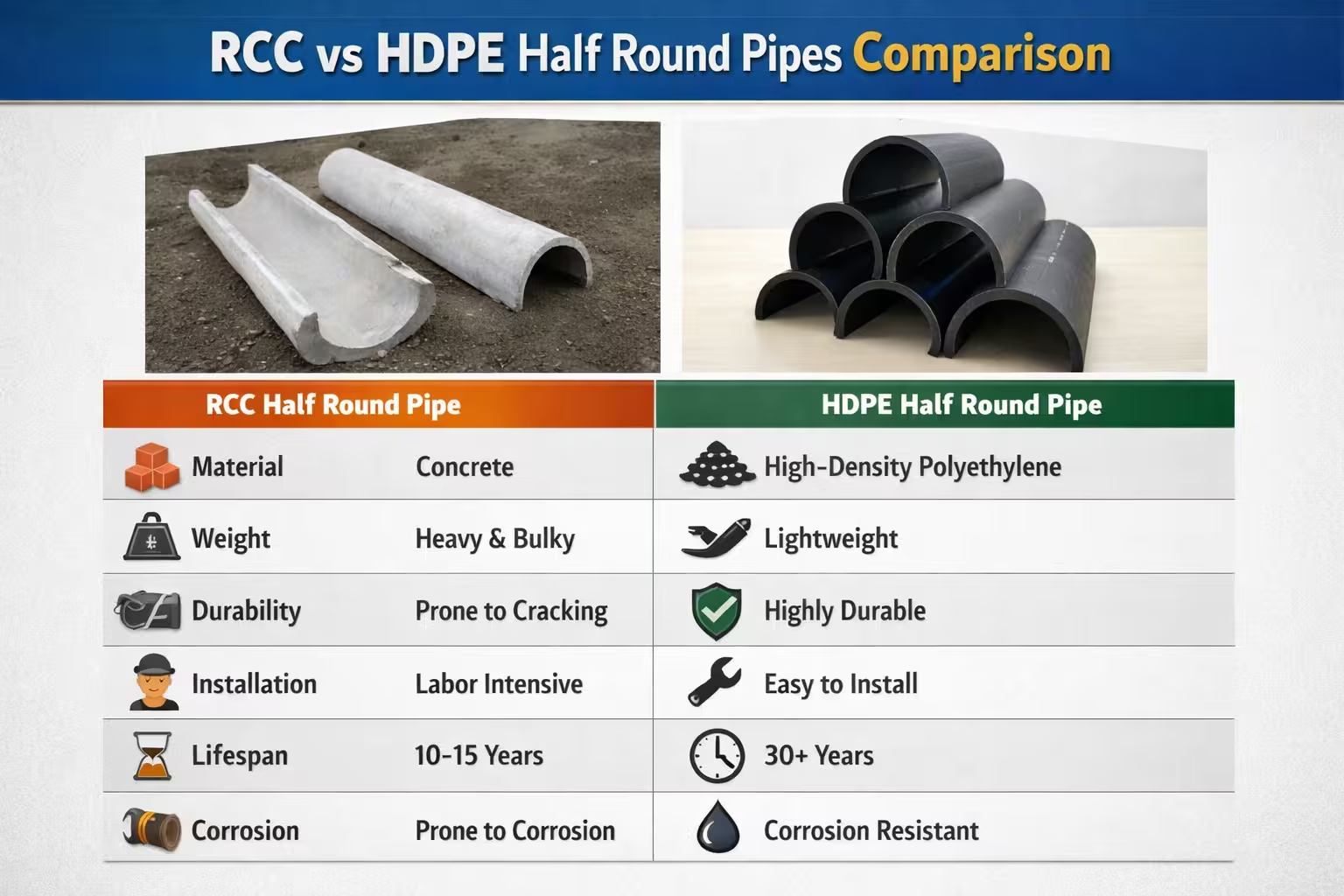
RCC (Reinforced Cement Concrete) Half Round Pipes are semi-circular concrete structures reinforced with steel. They have been used for decades in drainage and cable covering applications.
Key Characteristics of RCC Half Round Pipes
Made from cement, aggregates, and steel reinforcement
Very rigid and heavy
Rough internal surface
Prone to cracking due to settlement and corrosion of steel
Common Applications
Roadside and highway drainage
Traditional cable covering
Municipal stormwater channels
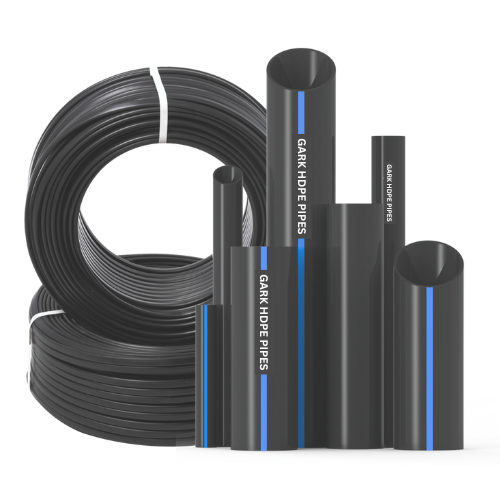
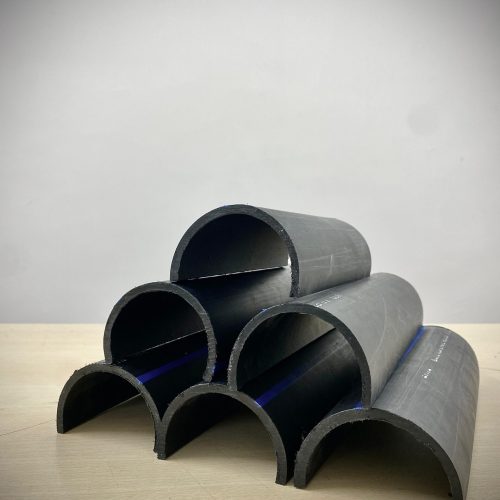
HDPE Half Round Pipes are manufactured from High Density Polyethylene, a flexible and corrosion-resistant polymer. They represent the modern evolution of cable protection and drainage solutions.
At GARK Polyplast Pvt. Ltd., HDPE Half Round Pipes are produced using high-quality HDPE material, offering superior performance compared to conventional RCC half round pipes.
Key Characteristics of HDPE Half Round Pipes
Common Applications
Electrical & telecom cable protection
Optical fiber (OFC) networks
Industrial and utility corridors
Highway and railway projects
1. Material & Durability
RCC Half Round: Susceptible to corrosion due to steel reinforcement; cracks over time.
HDPE Half Round: Completely corrosion-free; resistant to chemicals, moisture, and soil acids.
👉 Winner: HDPE Half Round Pipes
2. Weight & Handling
RCC Half Round: Extremely heavy; requires cranes, skilled labor, and higher transport cost.
HDPE Half Round: Around 80% lighter; easy to transport and install manually for many sizes.
👉 Winner: HDPE Half Round Pipes
3. Installation & Flexibility
👉 Winner: HDPE Half Round Pipes
4. Hydraulic & Surface Performance
👉 Winner: HDPE Half Round Pipes
5. Maintenance & Lifecycle Cost
👉 Winner: HDPE Half Round Pipes
👉 Eco-Friendly Choice: HDPE Half Round Pipes
India’s infrastructure is rapidly modernizing under Smart Cities, Digital India, BharatNet, and power transmission projects. For these applications, HDPE Half Round Pipes offer:
This is why many government and private projects now prefer HDPE Half Round Pipes over RCC Half Round Pipes.
Underground electrical cable protection
Telecom & OFC networks
Solar and renewable energy projects
Industrial utility corridors
For related solutions, you may also explore:
GARK Polyplast Pvt. Ltd. is an ISI certified manufacturer offering:
Precision-engineered HDPE Half Round Pipes
Compliance with Indian standards
Reliable supply across India
Proven performance in infrastructure projects
Looking for a reliable alternative to RCC Half Round Pipes?
Upgrade your project with HDPE Half Round Pipes from GARK Polyplast.
👉 Contact us today for specifications, pricing, and expert guidance:
🌐 https://garkgroup.com/
📧 sales@garkgroup.com
📞 +91 9081300225 / 0226
While RCC Half Round Pipes played an important role in traditional infrastructure, modern requirements demand lightweight, durable, corrosion-free, and cost-effective solutions. HDPE Half Round Pipes clearly outperform RCC Half Round Pipes in almost every parameter—installation, durability, maintenance, and sustainability.
Final Recommendation:
For new-age infrastructure in India, HDPE Half Round Pipes are the smarter, future-ready choice.